Every film starts on the page, whether it ends up shot on a phone, animated in Blender, or generated with AI. A screenplay is a blueprint: it tells everyone working on the film what we see and hear, scene by scene. This guide covers the format (with a sample page you can copy), how to structure a short film, how to write scenes and dialogue that work, the free software that does the formatting for you, and how to turn a finished script into a plan you can actually shoot.
What a screenplay is (and isn’t)
A screenplay describes only what can be seen and heard. No thoughts, no backstory the camera can’t show, no camera directions on every line. It is written in the present tense, in a standard format, and it’s meant to be read quickly. That format exists for a practical reason: formatted correctly, one page runs about one minute of screen time. It’s a rule of thumb, not a law (a page of fast dialogue plays shorter than a page of action), but it lets anyone estimate a film’s length, budget, and shooting schedule from the page count.
The format, element by element
- Scene heading (slugline): where and when.
INT.(interior) orEXT.(exterior), the location, thenDAYorNIGHT. Every new location or time gets a new scene heading. - Action: what we see, in the present tense, in short paragraphs. Introduce a character in capitals the first time they appear, with an age and a quick, telling description.
- Character: the speaker’s name, in capitals, above their dialogue. Add
(V.O.)for voice-over or(O.S.)for someone heard but not seen in the scene. - Dialogue: what they say, in a narrower column under the name.
- Parenthetical: a brief note under the name, such as
(whispering). Use them sparingly; actors and directors prefer to find the delivery themselves. - Transition:
CUT TO:and the like. Modern scripts rarely use them, since a new scene heading already implies a cut.
The traditional look is 12-point Courier on U.S. letter paper, with a wider margin on the left for binding. You don’t need to memorize the measurements: screenwriting software sets them for you.
A sample page
FADE IN:

EXT. HARBOR ROAD - NIGHT

Rain hammers a shuttered fish market. A single
streetlight.

NORA (60s), soaked, in a man's oversized coat, waits
under the awning. She checks a battered wristwatch.
It has stopped.

A car approaches. Headlights sweep across her face.
She straightens, hopeful.

The car doesn't slow down.

                    NORA
          (to herself)
     Thirty years. You could have
     been on time once.

She unfolds a letter, soft with handling. Reads it
again.

INT. NORA'S KITCHEN - CONTINUOUS (MEMORY)

Sunlight. A YOUNG MAN (20s) laughs, steals a piece
of bread from her plate.

                    YOUNG MAN (V.O.)
     Wait for me at the market.
     I'll find you.
Notice what the page does: the action lines are short and visual, every line of dialogue earns its place, and the stopped watch tells us something without anyone saying it.
Free and paid screenwriting software
Formatting by hand is miserable. These programs handle it as you type (press Tab or Enter to move between elements) and export a clean PDF:
- Trelby: free and open source, for Windows and Linux.
- Highland 2: for Mac, with a free version; you write in plain text and it formats the script.
- WriterDuet: works in the browser, good for writing with a partner; the free plan is limited to a few scripts.
- Arc Studio: browser-based, with outlining tools and a limited free plan.
- Fade In: a paid professional program for Mac, Windows, and Linux, priced far below the industry standard.
- Final Draft: the long-time industry standard, and the most expensive; there’s a free trial.
Many of these read and write the Fountain plain-text format or the Final Draft .fdx file, so you can move a script between programs. Prices and free-plan limits change, so check each site before you buy.
From idea to structure
1. Write a logline
Before you write a scene, write one sentence: who wants what, and what stands in the way. For example: “A widow who has waited at the same harbor every night for thirty years finally learns why her husband never came back.” If you can’t write the logline, the story isn’t clear yet, and no amount of pages will fix that. You’ll need it again later, too: festival and IFN submission forms ask for one.
2. Find the shape
Feature films often follow a three-act shape: set up a person and a problem, complicate it until it seems impossible, then resolve it. A short film usually has room for less. A good short is often one situation and one turn: we meet someone in a moment of pressure, something changes, and they (or we) see things differently by the end. Plenty of great shorts are a single scene.
A simple beat sheet for a short:
- Opening image: who, where, and what’s normal.
- The disruption: something happens that the character must respond to.
- Escalation: their attempts make it harder, stranger, or more personal.
- The turn: a reveal, a decision, or a reversal.
- Closing image: an echo of the opening that shows what changed.
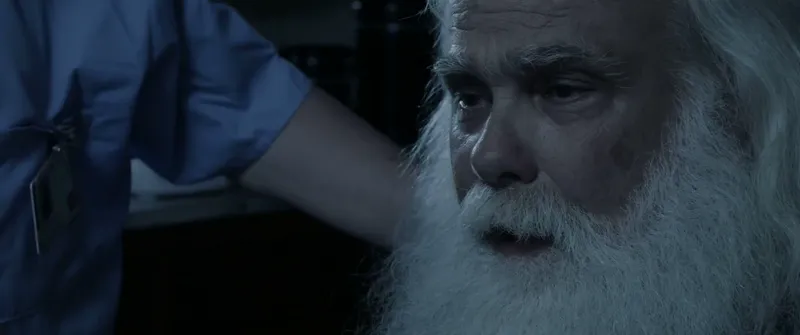
House Call is a good example of how much a short can do with very little. Made in 48 hours for a film contest, it puts an old man and a visitor at a kitchen table, gives him something he wants badly, and saves its turn for the last moment.
3. Outline before you draft
List your scenes on cards or in a document, one line each: where it happens, who’s in it, and what changes. If a scene doesn’t change anything, cut it or combine it with another. Moving cards around is much faster than rewriting pages.
Writing scenes that work
- Every scene needs a want and an obstacle. Someone in the scene wants something; something or someone is in the way.
- Enter late, leave early. Start a scene as close to the important moment as you can, and get out as soon as it lands. Skip the hellos and goodbyes.
- Show, don’t tell. The stopped watch on the sample page says more than a line about waiting. Ask of every line: could we see this instead?
- Write subtext. People rarely say exactly what they mean, especially when it matters. A couple arguing about the dishes is rarely about the dishes.
- Make dialogue sound like people. Short lines, interruptions, unfinished thoughts. Read every line aloud; if it’s hard to say, rewrite it.
- Give each character a voice. Cover the names: can you tell who’s speaking?
- Keep action lines lean. Three or four lines per paragraph at most. White space keeps a reader moving.
Write for what you can shoot
The fastest way to finish a first film is to write one you can make with what you have. Independent filmmakers have always done this. Carnival of Souls was made on a shoestring budget by Herk Harvey, a director of industrial and educational films, around Lawrence, Kansas, and an abandoned lakeside pavilion near Salt Lake City. Dementia 13, Francis Ford Coppola’s first feature as director, was produced by Roger Corman for about $42,000. The limits shaped the films, and became part of their style.
- Locations you can get for free: your home, a friend’s shop, a park, a car.
- Few characters: two or three people you can rely on to show up.
- Daytime, if you’re shooting live action: night shoots need lights, power, and patience.
- No crowds, stunts, animals, children, or period costume unless you truly need them; each adds time and cost.
- Short: five to ten pages is a strong first goal. Short running times are also easier to program at festivals.
Making an animated or AI film instead? The same rules apply in a different currency: every new character, location, and complicated action costs you hours of work. See our guides to making a film in Blender and making a film with AI.
Rewriting
The first draft is for you; the rewrite is for the audience. Put the script away for a few days, then:
- Read it aloud, start to finish, in one sitting.
- Hold a table read: ask friends to read the parts while you listen. You’ll hear every clumsy line.
- Cut 10 percent. Almost every script gets better shorter.
- Check each scene against your outline: does it still change something?
- Get one or two honest readers, and ask what they felt, not whether they liked it.
Planning your scenes: from script to shoot
A finished script is not yet a plan. These four documents turn it into one. You can make them in a spreadsheet; some screenwriting programs help too.
The script breakdown
Go through the script scene by scene and list what each one needs: cast, location, props, wardrobe, special effects, vehicles, and sound. Mark them in the script with different colored highlighters if you like; that’s how it’s traditionally done. The breakdown tells you what you have to find, borrow, or make.
The shot list
For each scene, list the shots you need to tell it. A simple version:
| Shot | Size and angle | Movement | What happens |
|---|---|---|---|
| 1A | Wide, low angle | Static | Rain on the market; Nora waits under the awning |
| 1B | Insert | Static | The stopped wristwatch |
| 1C | Medium close-up | Slow push in | Headlights sweep her face; she straightens |
| 1D | Wide, her point of view | Pan with the car | The car passes without slowing |
| 1E | Close-up | Handheld | “Thirty years…” She takes out the letter |
Shoot more than you think you’ll need: a wide “master” of the whole scene, then closer shots and inserts. Those extra angles are what let an editor shape the scene later.
Storyboards and blocking
A storyboard is the shot list in pictures; stick figures are fine, and some filmmakers use photos from their phone or a quick 3D layout instead. For scenes with movement, draw a simple floor plan from above showing where the actors and the camera go (that’s called blocking). One rule to know: the 180-degree rule. Imagine a line between two characters facing each other and keep the camera on one side of it, so they stay on the same sides of the screen from shot to shot and the audience doesn’t get disoriented.
The schedule
Films are rarely shot in story order. Group the scenes by location, then by time of day and by cast, so you set up in each place once. Estimate time from the page count: on a micro-budget set, a few pages a day is a realistic pace for a beginner crew. The night before each shooting day, send everyone a call sheet: where, when, who, what to bring, and the weather.
Protecting your script
In the U.S., your script is protected by copyright as soon as you write it down. Registering it with the U.S. Copyright Office gives you a public record and stronger legal options if someone copies it. Many writers also use the Writers Guild of America West’s Registry, which records the date you wrote something. Either way, keep dated drafts.
Try it: a three-page short
Write a three-page script set in one location you can access tomorrow, with two characters. One of them wants something the other won’t give. End with an image, not a line of dialogue. Then break it down, write a shot list, and shoot it on your phone over a weekend. You’ll learn more from those three pages than from any book.
Next: share your film
When it’s finished, submit it to IFN; it’s free, a person watches every film, and you keep ownership. Our guide to choosing film festivals explains where else to send it, and the festival directory lists upcoming deadlines. Need gear? Read our guide to camera and sound gear for indie filmmakers.
Sources: U.S. Copyright Office registration; WGA West Registry; Fountain screenplay format; each software maker’s website. Checked November 10, 2026. Film details are from each film’s page on IFN.