In June 1945, as World War II was ending, the U.S. Army gave Major John Huston of the Signal Corps a new assignment: a film about soldiers who had come home with wounds no one could see. The film he made, Let There Be Light, was finished in 1946. Then the Army kept it from the public for 35 years.
What the film shows
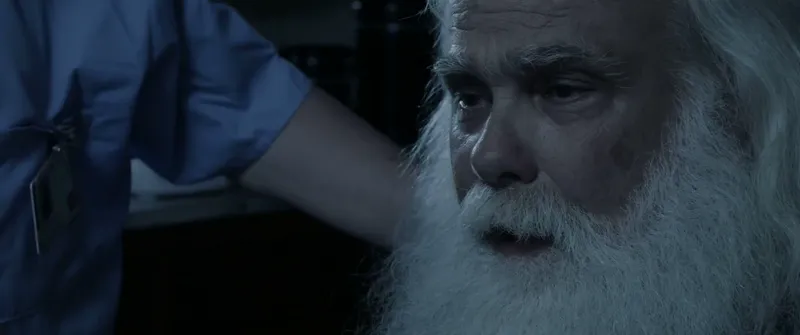
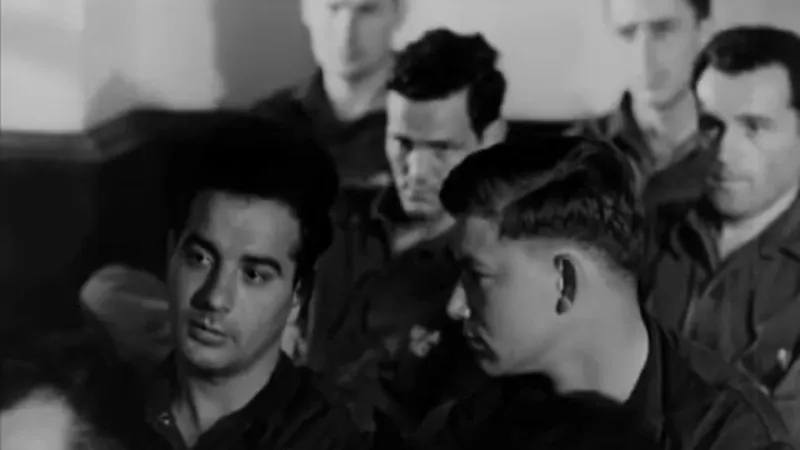
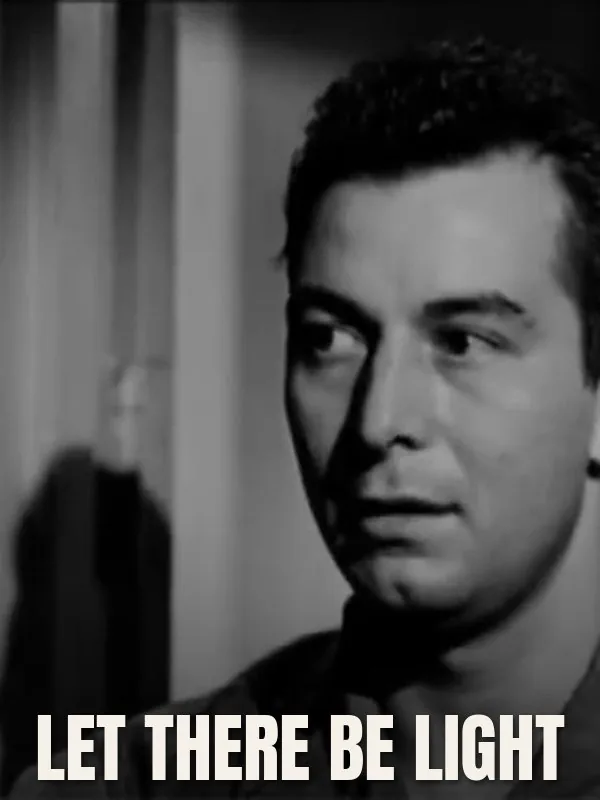
Huston chose Mason General Hospital on Long Island, an Army psychiatric hospital, and filmed a group of newly arrived soldiers from the day they came in. His cameras follow them through interviews, hypnosis, group therapy, and recovery, until the day they are discharged. The men talk about what combat did to them, often haltingly, in their own words: trembling, memory loss, nightmares, a stammer that wasn’t there before the war. Huston’s father, the actor Walter Huston, narrates, and Dimitri Tiomkin wrote the music.
Huston’s purpose, as the National Film Preservation Foundation describes it, was to show that men who suffered mental wounds in the service should not be written off. The film ends on hope: the same men playing baseball, talking easily, heading home.
It runs 58 minutes. A note for viewers: it deals directly with psychological trauma from war.
Huston’s three Army documentaries
Let There Be Light was the last of three documentaries Huston made for the Army, and all three are on IFN:
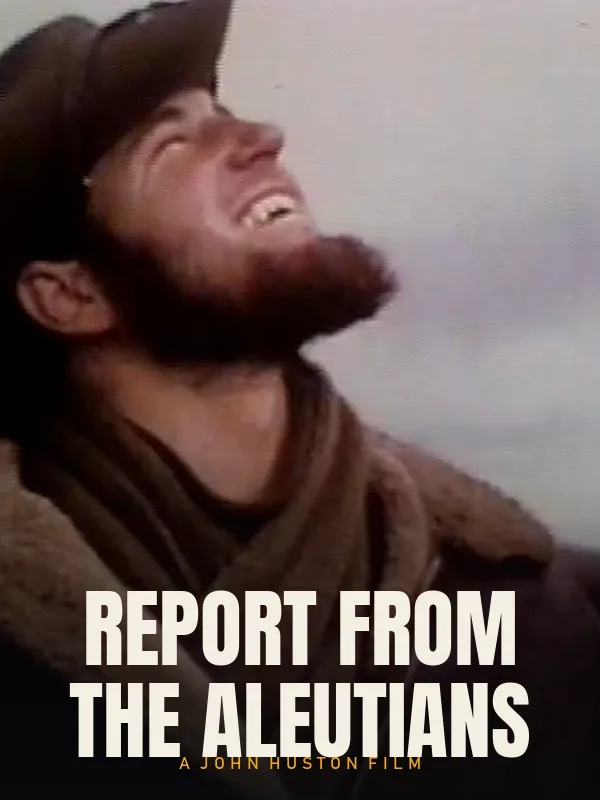
- Report from the Aleutians (1943). Soldiers building and flying from an airfield in the remote, weather-beaten Aleutian Islands off Alaska.
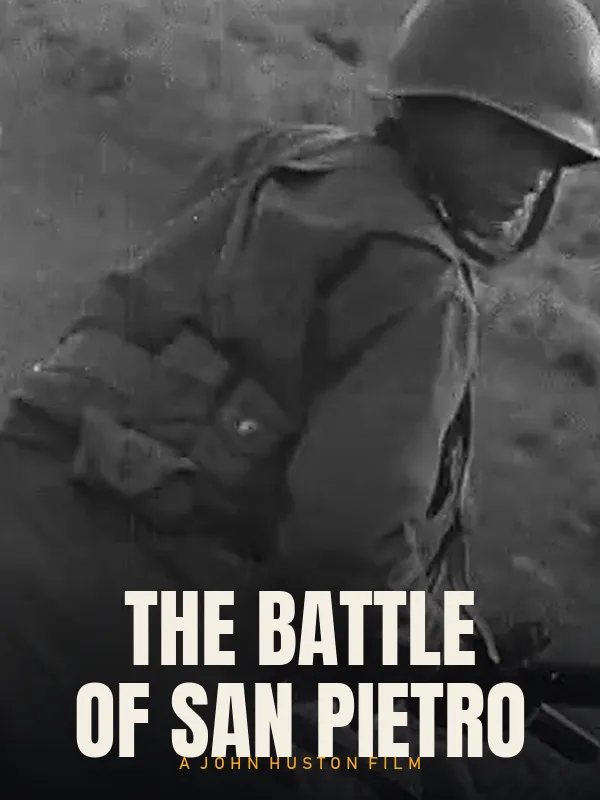
- The Battle of San Pietro (1945). Infantry fighting for a village in Italy, with a frankness about death that troubled the Army.
- Let There Be Light (1946). The men who came home.
Watched together, they move from the logistics of war, to combat, to its aftermath.
Why the Army kept it hidden
In March 1946, a War Department order limited showings to a few Army hospitals and venues overseas. The reason the Army gave was the privacy of the patients in the film. Huston didn’t believe it. “I don’t think that was the real reason,” he said later, as quoted by the National Film Preservation Foundation. Others have pointed to worries about what the film might do to postwar recruiting.
The cost of the ban is easy to miss. In 1946, millions of veterans were coming home, and the film’s message, that psychological wounds were real and could heal, was exactly what their families needed to hear. Instead, for more than three decades one of the most humane films made about the war was seen by almost no one outside the Army.
How it finally came out
The ban lasted into 1980. Jack Valenti, a friend of Secretary of the Army Clifford Alexander Jr., worked to have it lifted. The film was screened at the Los Angeles County Museum of Art on November 8, 1980, still officially without permission. On December 16, Alexander authorized its release, and on January 16, 1981, it opened in Manhattan at the Thalia. Later that year it was shown in the Un Certain Regard section at the Cannes Film Festival.
In 2010 the Library of Congress added it to the National Film Registry. The National Film Preservation Foundation later funded a restoration from the National Archives’ materials, and that restoration is the version IFN shows.
From shell shock to PTSD
The men in the film had a condition that had been given many names. According to the VA’s National Center for PTSD, in World War I symptoms were called “shell shock,” because they were seen as a reaction to exploding artillery shells. By World War II the diagnosis was combat stress reaction, also known as “battle fatigue.” The first edition of psychiatry’s diagnostic manual, the DSM, included “gross stress reaction” in 1952; the second edition dropped it in 1968.
Then, in 1980, the American Psychiatric Association added posttraumatic stress disorder to the DSM-III. PTSD became an official diagnosis in the same year that Let There Be Light finally reached the public. In 1989, Congress created the National Center for PTSD within the VA.
What PTSD is
The VA describes PTSD as a mental health problem that can develop only after someone goes through or sees a life-threatening event. It lists four types of symptoms, and a diagnosis needs each type:
- Reliving the event, also called re-experiencing, such as nightmares or flashbacks.
- Avoiding things that remind you of the event.
- Having more negative thoughts and feelings than before the event.
- Feeling on edge or keyed up, also called hyperarousal.
The most important thing the VA says is the same thing Huston’s film said in 1946: it can get better. The VA’s most highly recommended treatments are trauma-focused psychotherapies, such as Cognitive Processing Therapy, Prolonged Exposure, and Eye Movement Desensitization and Reprocessing (EMDR), and some medications help too. “For many people, treatment can get rid of symptoms altogether,” the VA says.
If you or a veteran you know needs help
The Veterans Crisis Line is free, confidential, and open around the clock for veterans, service members, National Guard and Reserve members, and the people who support them. Dial 988, then press 1, text 838255, or chat online at VeteransCrisisLine.net. You don’t have to be enrolled in VA benefits or health care to connect. To learn more about PTSD and treatment, visit the VA’s National Center for PTSD.
Watch on IFN this Veterans Day
Let There Be Light is free to watch on demand on IFN in the United States, where works of the U.S. government are in the public domain. On Veterans Day, Wednesday, November 11, it opens Prime Time on IFN Live at 8 PM ET; see the schedule for the full Veterans Day lineup in your time zone.
These films are part of IFN’s From the Archives collection: films made by and for the U.S. government. They’re labeled for what they are, Army productions rather than independent films, and pieces of history that deserve to be seen.
Sources: National Film Preservation Foundation, Let There Be Light (1946); Wikipedia, Let There Be Light (1946 film); VA National Center for PTSD, History of PTSD and PTSD Basics; Veterans Crisis Line. Checked November 8, 2026. This article is for general information, not medical advice.