
Sit through the credits of any feature and you’ll see dozens or hundreds of names with titles that make little sense from the outside: gaffer, best boy, key grip, DIT. Each one is a real job with clear responsibilities, organized into departments that work in a set order. This guide explains who does what, department by department, and how an independent film covers the same jobs with a handful of people.
Above the line and below the line
Budgets split a production into two groups. Above the line are the people who shape the project from the start, typically the producers, director, writers, and principal cast. Below the line is everyone else on the crew, plus equipment and other production costs. The terms come from where these items sit on a traditional budget’s top sheet.
Producing
- Producer: responsible for the film as a whole, from development and financing to delivery. Hires key people, keeps the project alive.
- Executive producer: often provides or secures money or important access; the role varies a lot from film to film.
- Line producer: manages the budget and the physical production day to day.
- Production manager and production coordinator: handle logistics: crew deals, equipment orders, paperwork, travel.
- Production assistants (PAs): help wherever needed, from lockups (keeping the public out of a shot) to coffee runs. Many careers start here.
Directing department
- Director: leads the creative vision: performances, the look, the story told shot by shot.
- First assistant director (1st AD): runs the set. Builds the shooting schedule, keeps the day on time, calls the commands (“quiet on set,” “roll sound,” “action” comes from the director), and is responsible for safety on set.
- Second assistant director (2nd AD): prepares the daily call sheet and manages the cast’s schedule, from arrival through makeup to set.
- Script supervisor: tracks continuity (which hand holds the cup, how full the glass is) and keeps detailed notes on every take, which the editor relies on.
Camera department
- Director of photography (DP or cinematographer): designs the look of the film with the director, decides the lighting and camera approach, and leads the camera, electric, and grip crews.
- Camera operator: physically operates the camera: framing, panning, tilting. On smaller films the DP often operates.
- First assistant camera (1st AC), or focus puller: keeps the image sharp by adjusting focus during the shot, and builds and maintains the camera.
- Second assistant camera (2nd AC), or clapper loader: claps the slate, manages media cards, and keeps the camera reports.
- Digital imaging technician (DIT): backs up the footage, checks it for problems, and often prepares on-set color so the image looks right on monitors.
Grip and electric: the two departments people mix up
| Electric | Grip | |
|---|---|---|
| Head of department | Gaffer | Key grip |
| Second in command | Best boy electric | Best boy grip |
| Handles | The lights and the power that runs them | Everything that supports or shapes, without electricity: stands, flags, frames, rigging, camera dollies and cranes |
| Example | Placing and powering the key light | Putting a black flag in front of it to keep light off the wall |
- Gaffer: the chief lighting technician, who turns the DP’s lighting plan into reality.
- Best boy: the second in command in electric or grip, who manages the crew, schedules, and equipment. The title is used regardless of gender.
- Dolly grip: pushes the camera dolly, hitting exact marks and speeds so the move matches the action, take after take.
- Electricians (“sparks”) and grips: the crews who carry out the work.
Sound department
- Production sound mixer: records the dialogue and sound on set, sets the levels, and decides on microphones.
- Boom operator: holds the boom microphone over the actors, just out of frame. See our guide to recording clean dialogue.
- Sound utility: fits lavalier mics, manages cables and batteries.
Art, costume, hair, and makeup
- Production designer: creates the visual world: sets, locations, color palette.
- Art director: manages the art department and turns the designs into plans.
- Set decorator and set dressers: furnish the sets with everything that isn’t handled by actors.
- Prop master: handles props, the objects actors touch and use.
- Costume designer and wardrobe crew: design, source, and maintain costumes, and track them for continuity.
- Hair and makeup artists: including special effects makeup for wounds, aging, and creatures.
Other key roles
- Casting director: finds and auditions actors.
- Location manager: finds locations, negotiates their use, and handles permits.
- Stunt coordinator: designs and supervises stunts and any risky action.
- Intimacy coordinator: plans intimate scenes with the actors and director so they’re safe and agreed.
- Craft services and catering: feed the crew. Never underestimate this job on a long shoot.
Post-production
- Editor: assembles the footage into the film, shaping the story and pacing with the director.
- Colorist: adjusts color and contrast for a consistent look.
- Sound editors and sound designer: clean the dialogue, build sound effects and ambience, and create sounds that don’t exist.
- Foley artist: performs everyday sounds (footsteps, cloth, doors) in sync with the picture.
- Re-recording mixer: balances dialogue, music, and effects into the final mix.
- Composer: writes the score.
- Visual effects supervisor and artists: plan and create effects shots, often starting before the shoot.
Crewing an indie film with a handful of people
Low-budget productions combine roles. A practical small crew might look like this:
| Person | Covers |
|---|---|
| Director | Directing; often also writing and producing |
| Producer / 1st AD | Schedule, call sheets, running the set, locations, food |
| DP | Camera operation and lighting design |
| Gaffer / grip | Lights, power, flags, rigging, a simple dolly |
| Sound mixer / boom | All production sound |
| Art, wardrobe, and makeup | Sets, props, costumes, continuity of the look |
| PA / 2nd AC | Slate, media backups, everything else |
Two combinations are worth avoiding if you can. The director and the 1st AD: someone has to watch the clock while the director watches the performances. And sound with camera operation: it’s very hard to frame a shot and monitor audio at the same time, and sound is the first thing to suffer. A dedicated sound person is one of the best investments a small production can make.
Before hiring, check the rules that apply to you. Unions and guilds such as IATSE, the Directors Guild, and SAG-AFTRA have their own agreements; SAG-AFTRA, for example, offers agreements designed for low-budget and short films. Requirements change, so check with them directly.
Try it: open the credits of a short film you admire and sort every name into the departments above. Then make the same list for your next project, writing one name next to every job, even if it’s your own name six times. Gaps on that list are problems you’d otherwise discover on the day.
A crew with a story: Salt of the Earth
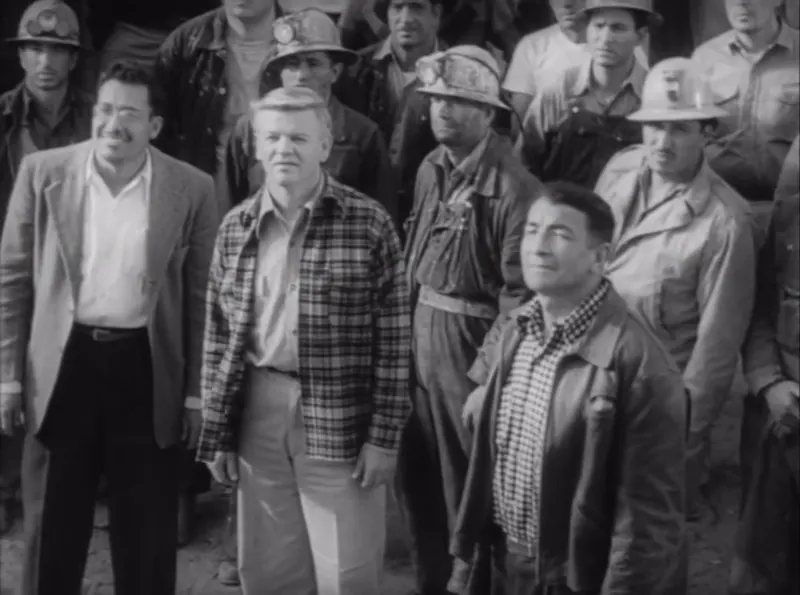
Salt of the Earth (1954) was made by filmmakers blacklisted in Hollywood during the Red Scare: director Herbert Biberman, producer Paul Jarrico, and writer Michael Wilson. Shut out of the studios, they made the film independently in New Mexico, with most roles played by members of the real mining community whose strike it portrays. It’s a lesson in what a determined small production can do.
Every film on IFN lists its credits on its page, so you can see how real productions crewed up, from Blender Studio’s open movies like Tears of Steel to classic independents. Browse the library, and when your film is ready, submit it to IFN, free.
Sources: role descriptions follow common industry usage, as described by the Directors Guild of America (dga.org) for assistant directors and by IATSE (iatse.net) for craft departments; SAG-AFTRA (sagaftra.org) for its low-budget agreements; the Library of Congress National Film Registry, which added Salt of the Earth in 1992, for the film’s history.