An aspect ratio is the shape of the picture: its width compared with its height. It is one of the first decisions a filmmaker makes, and one of the most visible. The same scene feels different in a tall, nearly square frame than in a long, wide one. Here is what the numbers mean, how movies arrived at the shapes we use today, and how to choose one for your own film.
What the numbers mean
Aspect ratios are written two ways. 16:9 means 16 units wide for every 9 units high. 1.78:1 says the same thing as a decimal: the picture is 1.78 times as wide as it is tall. Television and video people tend to use whole numbers (4:3, 16:9); film people tend to use decimals (1.85:1, 2.39:1), often shortened to just “1.85” or “2.39.”
To find a ratio, divide the width by the height. A 1920 × 1080 video is 1920 ÷ 1080 = 1.78, which is 16:9. A 1920 × 800 picture is 2.4, a wide “scope” frame.
A short history of the frame
1.33: the first standard
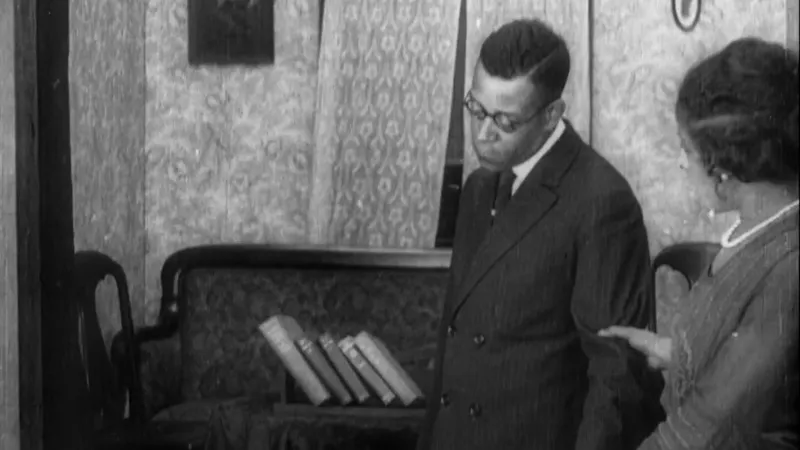
The first widely used movie frame came from Thomas Edison’s lab, where William Kennedy Laurie Dickson settled on 35mm film with four sprocket holes per frame in the early 1890s. That frame was about 1.33 times as wide as it was tall: 4:3. Nearly the whole silent era was shot in this shape. You can see it in Within Our Gates (1920), Oscar Micheaux’s silent drama.
1.37: the Academy ratio
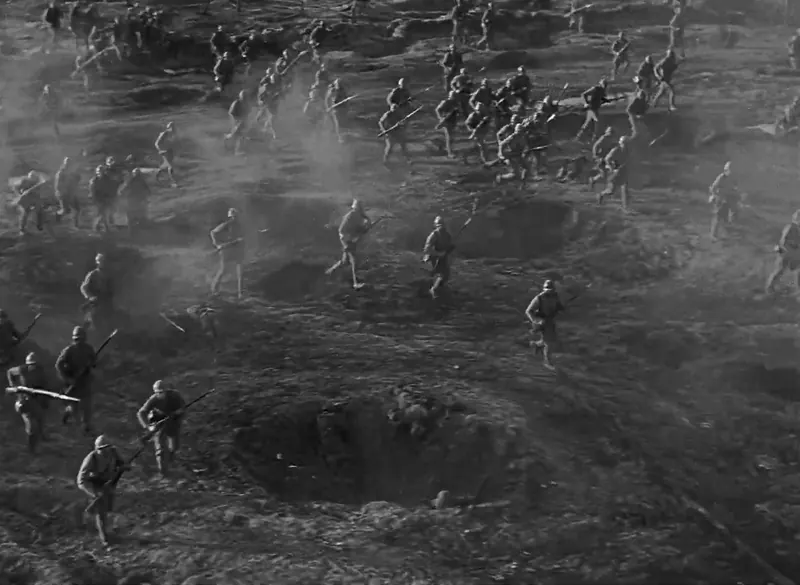
When sound arrived at the end of the 1920s, the soundtrack was printed as a stripe along the edge of the film, which ate into the picture. After a few years of odd, nearly square frames, the Academy of Motion Picture Arts and Sciences adopted a standard in 1932: about 1.37:1, known ever since as the Academy ratio. It was nearly universal in sound films until 1953. Classic films like The Hitch-Hiker (1953) and the later independent horror film Carnival of Souls (1962) use it.
The 1950s: widescreen fights television
Television sets copied the old 4:3 movie shape, and as TV spread through American homes in the early 1950s, cinema attendance fell. Hollywood answered with pictures that no living room could match. Cinerama used three projectors side by side on a deeply curved screen. CinemaScope, introduced by 20th Century Fox with The Robe in 1953, used an anamorphic lens that squeezed a wide image onto normal 35mm film; a matching lens on the projector unsqueezed it. Paramount’s VistaVision ran 35mm film sideways through the camera for a larger, sharper frame, and Todd-AO used wide 70mm film at about 2.20:1.
The cheapest widescreen trick was simply to mask off the top and bottom of a normal frame. In 1953 Universal introduced 1.85:1 this way, and it became the standard “flat” widescreen ratio for American films. Europe often used 1.66:1.
2.35, then 2.39
Anamorphic widescreen settled at about 2.35:1. The Society of Motion Picture and Television Engineers (SMPTE) standardized 2.35 in 1957, then changed it to 2.39 in 1970, slightly shortening the frame so that splices between pieces of film were less visible on screen. Projectionists and filmmakers still say “2.35,” “2.39,” and “2.40” almost interchangeably for this wide “scope” shape.
16:9: the compromise
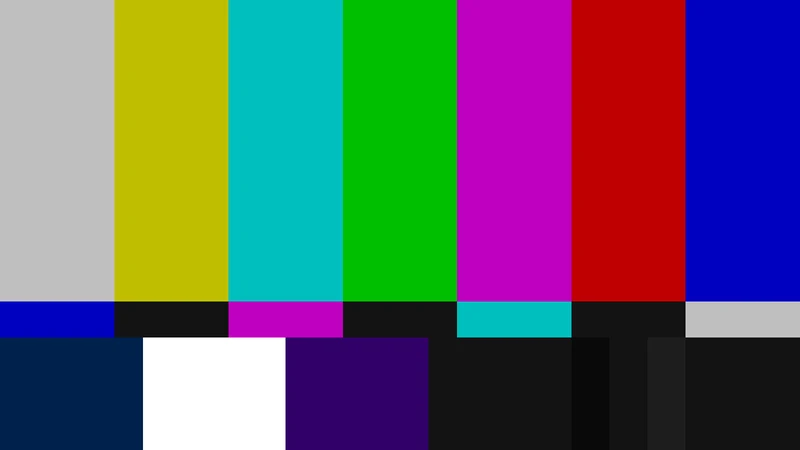
When engineers designed high-definition television in the early 1980s, they needed one screen shape that could show both old 4:3 programs and wide movies without wasting too much space. Kerns H. Powers, an engineer working with SMPTE, proposed 16:9 (1.78:1). It sits almost exactly between the two extremes: multiply 1.33 by 2.39 and take the square root, and you get about 1.78. Both kinds of picture fit on a 16:9 screen with modest black bars. It became the international standard for HDTV, and today it is the shape of nearly every TV, laptop, and streaming video.
Today: digital cinema, IMAX, and vertical video
Digital cinema projectors use standard containers: “flat” 1.85:1 (1998 × 1080 pixels at 2K) and “scope” 2.39:1 (2048 × 858). IMAX film runs 70mm stock sideways through the camera for a tall 1.43:1 frame; digital IMAX screens are usually 1.90:1. Some streaming productions use 2:1, a format the cinematographer Vittorio Storaro has championed as “Univisium.” And phones made 9:16, a 16:9 frame turned on its side, the native shape of social video.
Common aspect ratios at a glance
| Ratio | Also called | Where you see it |
|---|---|---|
| 1.33:1 (4:3) | Full frame, “square” | Silent films, old television, some modern art films |
| 1.37:1 | Academy ratio | Sound films from 1932 to the early 1950s |
| 1.66:1 | European widescreen | European films from the 1950s on |
| 1.78:1 (16:9) | HD, widescreen TV | Television, streaming, YouTube, most video cameras |
| 1.85:1 | Flat widescreen | Many American feature films |
| 2.00:1 | Univisium | Some streaming series and films |
| 2.39:1 | Scope, anamorphic, “2.35” or “2.40” | Epics, action, science fiction, many dramas |
| 9:16 | Vertical | Phone video, Reels, TikTok, Shorts |
Aspect ratios in IFN’s films
IFN’s library happens to cover nearly the whole history. We measured the picture area of these films in the copies IFN streams:
- 1.33:1: Within Our Gates (1920), a silent film.
- 1.37:1, the Academy ratio: The Hitch-Hiker (1953) and Carnival of Souls (1962).
- 16:9: Big Buck Bunny (2008) and Wing It! (2023).
- 2.35:1: Sintel (2010).
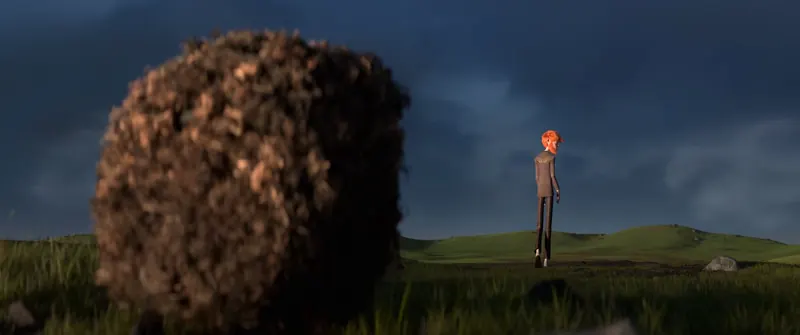
- 2.39:1 to 2.40:1, scope: Tears of Steel (2012), Cosmos Laundromat: First Cycle (2015), Spring (2019), Sprite Fright (2021), and Charge (2022).
Watch one from each group back to back, and notice how the shape changes what the filmmakers put in the frame.
How the shape changes the story
- Wide frames (2.39) are made for landscapes, groups of people, and space. They can make one person feel small and alone, or let two characters share a shot at opposite edges, with the distance between them telling the story.
- Tall, narrow frames (1.33 and 1.37) favor faces and vertical spaces: doorways, staircases, a person standing in a room. They can feel intimate or confining.
- 16:9 and 1.85 sit in between and are flexible, which is why so much television and so many films use them.
There’s no correct choice, only a fitting one. Some filmmakers even change the ratio within a film, switching shape to mark a flashback, a different world, or a big moment. Our guide to camera shots and angles covers framing within whatever shape you choose.
Black bars: letterbox, pillarbox, and pan-and-scan
- Letterboxing adds black bars above and below, to show a wide film on a narrower screen. A 2.39 film on a 16:9 TV is letterboxed.
- Pillarboxing adds bars on the left and right, to show a narrow picture on a wider screen. A 1.37 classic on a 16:9 TV is pillarboxed.
- Pan-and-scan is the old alternative to letterboxing: cropping a wide film to fill a 4:3 TV, with an operator choosing which part of the frame to keep in each shot. Much of the composition is lost, which is why film lovers prefer letterboxed versions.
The bars aren’t missing picture. They are what lets you see the whole frame the filmmaker composed.
How to shoot in the ratio you want
- Choose before you shoot, and tell your cinematographer. The ratio decides how you frame every shot.
- Turn on frame guides. Most cameras and monitors can overlay 1.85 or 2.39 frame lines on a 16:9 picture, so you compose for the final shape while recording the full frame.
- Crop in the edit. Shooting 16:9 and cropping to 2.39 is common and costs nothing. In DaVinci Resolve, Timeline › Output Blanking adds the bars; our guide to DaVinci Resolve for beginners walks through the software. Cropping throws away pixels, so shoot at a higher resolution if you can.
- Or use anamorphic lenses. They squeeze a wider view onto the sensor (common squeezes are 1.33× and 2×), and you unsqueeze it in post. They give the true anamorphic look: oval out-of-focus highlights and horizontal lens flares.
- Export with the right pixel size. For 2.39 inside a 1920-wide frame, the picture is 1920 × 804; at UHD width it is 3840 × 1608. You can export just the picture at that size, or keep a 1920 × 1080 file with the bars built in, which some platforms prefer.
Animating in Blender? Set the output resolution to your final shape (for example, 1920 × 804 for scope) in the Output Properties before you render. Our guide to making your first film in Blender shows where to start.
Sources
- Wikipedia, “Aspect ratio (image)” (Edison and Dickson’s 35mm frame, the 1932 Academy ratio, Universal’s 1953 adoption of 1.85, SMPTE’s 2.35 and 2.39 standards, IMAX, Univisium). en.wikipedia.org/wiki/Aspect_ratio_(image)
- Benjamin B, “The Elastic Frame,” American Cinematographer blog, American Society of Cinematographers, 2016 (CinemaScope and The Robe, VistaVision). theasc.com/blog/the-film-book/the-elastic-frame
- Widescreen Museum and Widescreen.org, “Aspect Ratios” (CinemaScope, The Robe, and Kerns H. Powers’s 16:9 proposal). widescreen.org/aspect_ratios.shtml
- Wikipedia, “16:9 aspect ratio” (the HDTV standard and its origin). en.wikipedia.org/wiki/16:9_aspect_ratio
- Digital Cinema Initiatives, Digital Cinema System Specification (flat and scope image containers). dcimovies.com/dci-specification
- Film ratios on IFN were measured by IFN from the picture area of the copies it streams.
Online sources checked November 14, 2026.