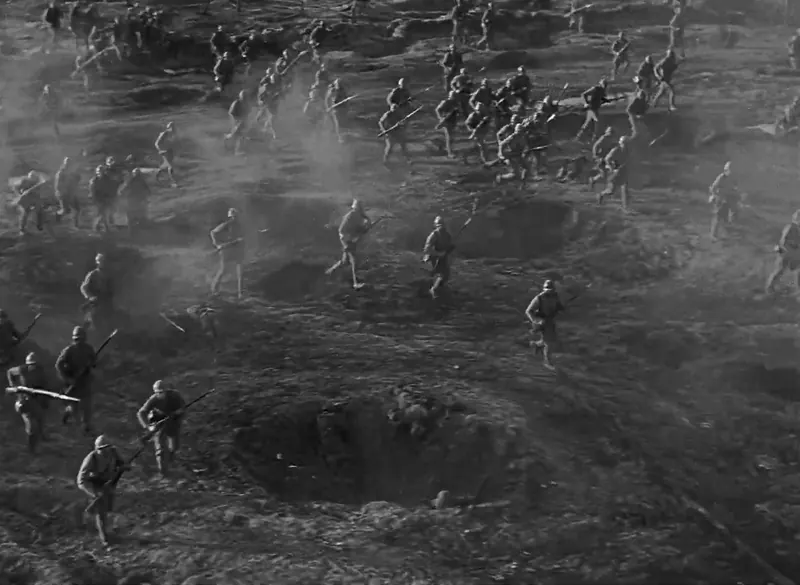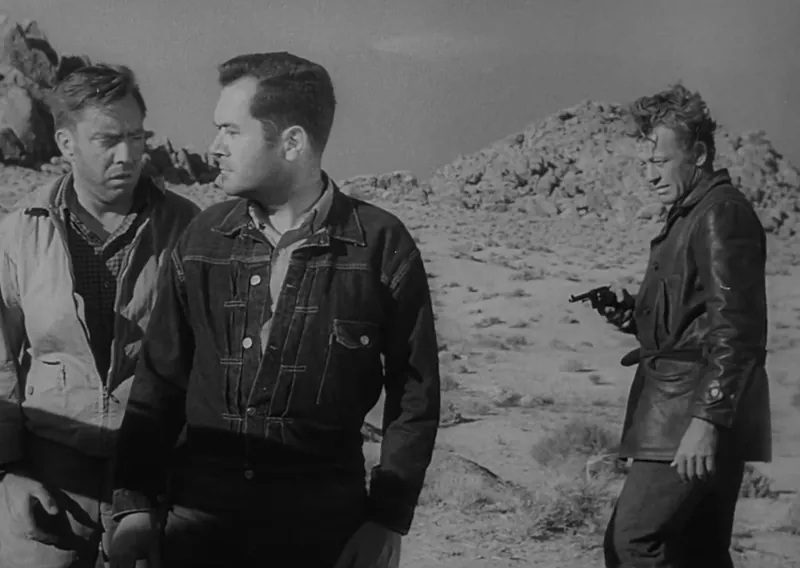
A movie is a series of still photographs. Show them quickly enough and your brain sees motion, smooth enough to forget the trick entirely. For almost a century the standard speed has been 24 frames per second. That number wasn’t handed down by science; it was a practical compromise made by engineers in the 1920s, and it stuck. Here is how the illusion works, where 24 came from, why television runs at strange rates like 29.97, and what happens when filmmakers go faster.
How still pictures become motion
You’ll often read that movies work because of persistence of vision: the idea that each image lingers on the eye until the next one arrives. Film scholars and psychologists have largely rejected that explanation. In a well-known 1993 article, Joseph and Barbara Anderson called it a myth, and argued that the popular replacement, the “phi phenomenon,” is often misused too.
The better explanation is apparent motion. The psychologist Max Wertheimer studied it in a famous 1912 paper: when two still images are shown one after the other, with the object in a slightly different place, we see the object move. Our visual system is built to detect movement, and small jumps between frames trigger the same response as continuous motion. That is why even 12 drawings a second can read as movement in animation.
Flicker is a separate problem. A dark screen between frames can make the image appear to flash. How fast the flashes must come before they blend into steady light depends on brightness: brighter images need faster flashing. So film projectors use a spinning shutter with two or three blades that shows each frame two or three times, producing 48 or 72 flashes a second, while the film itself still moves at 24 frames per second. The motion rate and the flash rate are two different things.
The silent era: no fixed speed
Early cameras were cranked by hand, and camera operators varied the speed, roughly from the mid-teens to the low twenties of frames per second, sometimes changing it within a scene for effect. Projectionists ran films at their own speeds too, and theaters often ran them fast to fit in more shows: a 1927 discussion among film engineers mentions New York theaters projecting at about 105 feet per minute, close to 28 frames per second.
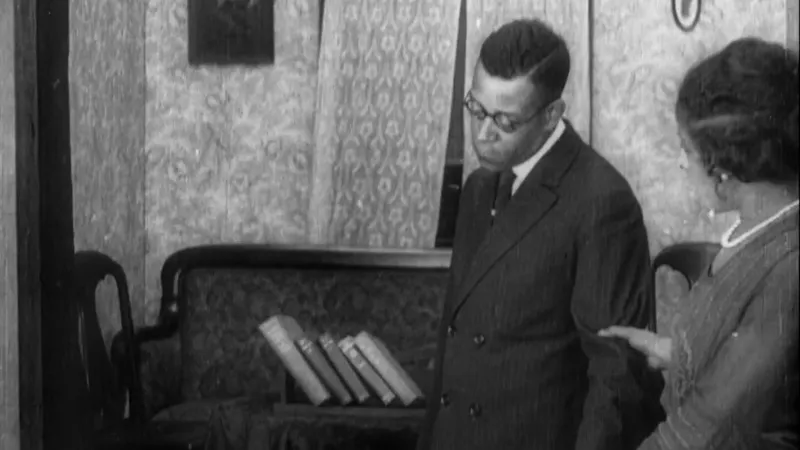
That is why silent films often look jerky and sped-up when they are shown at the modern standard: they are being played faster than they were shot. A careful restoration or transfer plays them at a speed closer to the original. You can watch a silent feature on IFN: Oscar Micheaux’s Within Our Gates (1920).
Sound locks the speed at 24
Sound changed everything, because sound has to play back at exactly the speed it was recorded or the pitch wobbles. When Western Electric developed the Vitaphone sound system for Warner Bros. in the mid-1920s, engineer Stanley Watkins settled on a speed of 90 feet of 35mm film per minute. A foot of 35mm film holds 16 frames, so 90 feet a minute is 1,440 frames a minute: 24 frames per second.
Why that number? Accounts differ. Watkins later said it was about the average speed theaters were already projecting at. Others point to cost: film stock was expensive, and 24 was reasonably economical while giving acceptable motion and, for sound-on-film systems, enough length of soundtrack per second for decent audio. What everyone agrees on is that it wasn’t the result of careful perception research. Fox’s Movietone sound-on-film system adopted the same speed, and by the end of the 1920s 24 frames per second was the standard for sound films worldwide.
The 180-degree shutter and motion blur
Frame rate is only half of how motion looks; the other half is how long each frame is exposed. Film cameras use a rotating disk shutter, and the standard opening is half a circle: 180 degrees. At 24 frames per second that exposes each frame for 1/48 of a second, which blurs moving objects just enough to make the motion feel smooth and natural to audiences raised on films shot that way.
- The rule of thumb for digital cameras: set the shutter speed to about one over twice the frame rate. At 24 frames per second, use 1/48 or 1/50; at 30, use 1/60.
- A narrower shutter (a faster shutter speed) makes each frame crisper and motion choppier and more staccato, a look sometimes used for battle scenes and action.
- A wider shutter (a slower shutter speed) smears motion, which can feel dreamy or drunk.
- Watch your pans. At 24 frames per second, a fast camera pan across a detailed scene can stutter, a problem called judder. Cinematography manuals publish tables of safe panning speeds; the simple fix is to pan slower or follow a moving subject.
Our guide to camera and sound gear covers the camera settings that go with this.
Television’s different rhythm: 30, 25, and 29.97
Television grew up with a different clock: the electric power grid. Early TV systems timed their pictures to the mains frequency to avoid visible interference. North America’s 60 Hz power gave American television 60 fields a second, interlaced into 30 frames. Europe’s 50 Hz gave 50 fields and 25 frames, the rate used by the PAL and SECAM systems.
Then came color. When the U.S. adopted its NTSC color standard in 1953, engineers had to fit the new color signal into the existing channel without it interfering with the sound carrier. The fix was to slow everything down by one part in a thousand: 30 frames became 30 ÷ 1.001, or about 29.97, and 60 fields became 59.94. Digital television kept those rates for compatibility, which is why cameras today still offer 29.97 and 23.976, the TV-friendly version of 24.
Getting 24-frame film onto 30-frame television took a trick called 3:2 pulldown: alternate film frames are repeated across three and then two video fields, so four film frames fill five video frames. In 25-frame countries, films were simply played about 4 percent fast, which is why a film can run a few minutes shorter on European television, with the soundtrack slightly higher in pitch unless it is corrected.
Higher frame rates: smoother, and controversial
Filmmakers have tried faster rates many times. Douglas Trumbull’s Showscan process ran 70mm film at 60 frames per second. Peter Jackson shot The Hobbit: An Unexpected Journey (2012) at 48 frames per second, and Ang Lee went to 120 for Billy Lynn’s Long Halftime Walk (2016) and Gemini Man (2019). Higher rates make motion sharper and clearer, especially in 3D, but many viewers say the result looks less like cinema and more like video, the same reaction people have to the “soap opera effect.”
That effect comes from motion smoothing on many modern TVs, which invents extra in-between frames to raise the frame rate. Filmmakers dislike it because it changes the motion they chose. The UHD Alliance’s Filmmaker Mode, found on many TVs, turns motion smoothing and similar processing off; it’s worth switching on to watch films the way they were made.
Animation: on ones and twos
Animated films also play at 24 frames per second, but hand-drawn animation often uses a new drawing for every second frame, called animating “on twos,” which is 12 drawings a second. Fast action may switch to “on ones,” a new drawing every frame. Computer animation can render every frame, but some stylized films deliberately animate on twos to get a hand-made feel. Watch Blender Studio’s Wing It! and Sprite Fright to compare how different animated films treat motion.
Choosing a frame rate for your film
| Frame rate | Use it for |
|---|---|
| 24 (or 23.976) | The cinema look: narrative films, music videos, most indie work. Use 23.976 if your film may go to American television. |
| 25 | Countries with 50 Hz power and PAL heritage (much of Europe, Africa, Asia, and Australia), especially for broadcast. |
| 30 (or 29.97) | Online video, news, and a slightly “live” look. |
| 50 or 60 | Sports, games, and fast action meant to look smooth and immediate. |
| 60, 120, or more | Slow motion: shoot at 60 and play on a 24 timeline for 2.5× slower, or at 120 for 5× slower. |
Pick one rate before you shoot and use it for the whole project (except shots meant for slow motion). Under fluorescent or LED lights in 50 Hz countries, use 25 or 50 frames per second, or a shutter of 1/50, to avoid flicker in the picture. When you edit, set the timeline to the same rate; our DaVinci Resolve guide shows where.
Sources
- Joseph Anderson and Barbara Anderson, “The Myth of Persistence of Vision Revisited,” Journal of Film and Video 45, no. 1 (Spring 1993): 3–12. faculty.uca.edu/wsmeador/ccsmi/ccsmi/classicwork/Myth%20Revis...
- Max Wertheimer, “Experimentelle Studien über das Sehen von Bewegung,” Zeitschrift für Psychologie 61 (1912): 161–265.
- Wikipedia, “Beta movement” (Wertheimer’s apparent-motion studies and the phi phenomenon). en.wikipedia.org/wiki/Beta_movement
- Silent Film Music, “Faster Than the Speed of Sound” (Stanley Watkins on choosing 90 feet per minute; 1927 projection speeds). silentfilmmusic.com/sponable-105
- MUBI Notebook, “Dreams Per Second: A History of the Frame Rate.” mubi.com/notebook/posts/dreams-per-second-a-history-of-the-fr...
- Wikipedia, “Movietone sound system” (adoption of 24 frames per second for sound film). en.wikipedia.org/wiki/Movietone_sound_system
- Wikipedia, “NTSC” (60 Hz timing and the 1953 change to 29.97 frames per second for color). en.wikipedia.org/wiki/NTSC
- Wikipedia, “Three-two pull down.” en.wikipedia.org/wiki/Three-two_pull_down
- Wikipedia, “High frame rate” (Showscan, The Hobbit, Billy Lynn’s Long Halftime Walk, Gemini Man). en.wikipedia.org/wiki/High_frame_rate
- UHD Alliance, “Filmmaker Mode.” filmmakermode.com
- American Society of Cinematographers, American Cinematographer Manual (ASC Press), on shutter angle and panning speeds.
Online sources checked November 14, 2026.