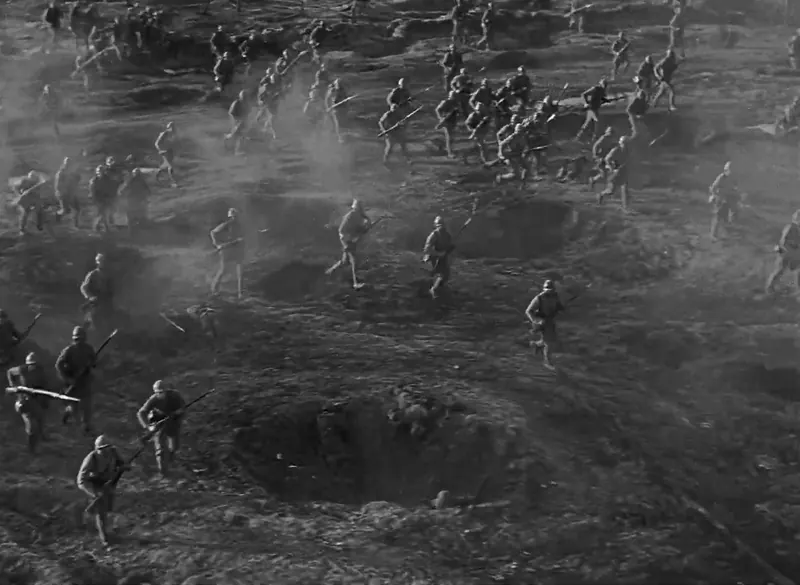
Founded in 1912, Universal is one of the oldest film studios in the world still in business. Its first quarter-century reads like a movie: an immigrant shopkeeper who built a city for making films, a son handed a studio for his 21st birthday, a Best Picture winner, a string of horror films that defined a genre, and a loan that cost the family everything. Universal’s 1930 Best Picture winner, All Quiet on the Western Front, is now in the public domain and streams free on IFN.
Carl Laemmle, from Laupheim to Chicago
Carl Laemmle was born on January 17, 1867, in Laupheim, in the German kingdom of Württemberg. He arrived in New York in 1884, at 17, and spent the next two decades in a string of jobs, including years at a clothing store in Oshkosh, Wisconsin. In 1906 he quit to go into the new nickelodeon business, opening one of Chicago’s early movie theaters, The White Front.
He soon moved from showing films to renting them to other theaters, and then to making them. That put him in conflict with the Motion Picture Patents Company, the so-called Edison Trust, which controlled the key patents on cameras and projectors and tried to license, or shut down, everyone else. Laemmle became one of the most prominent independents to defy the Trust, through his own production company, Independent Moving Pictures, and years of legal battles.
1912: Universal is born
On April 30, 1912, Laemmle and a group of other independent producers, among them Pat Powers, Mark Dintenfass, Charles Baumann, and Adam Kessel, merged their companies into the Universal Film Manufacturing Company, incorporated in New York. After a struggle among the partners, Laemmle emerged as president that July and ran the company for the next 24 years.
1915: a city for making movies
On March 15, 1915, Laemmle opened Universal City on a former farm of about 230 acres just over the Cahuenga Pass from Hollywood. It was a self-contained town for filmmaking, with stages, backlots, workshops, and its own services. For about a decade, Universal was the largest studio in Hollywood, turning out a steady stream of westerns, serials, and melodramas.
Laemmle also invited the public in. Visitors could watch films being made for a 25-cent admission, with a boxed chicken lunch available for a nickel. The visits ended around the arrival of sound, because the stages weren’t soundproof; the modern Universal Studios tour began on July 15, 1964.
The 1920s: Chaney, Thalberg, and a second-tier studio
Universal’s young production chief Irving Thalberg left in 1922 for Louis B. Mayer’s company, which became MGM, and Universal settled into making more modest, cheaper films than its biggest rivals. It still produced landmarks: Lon Chaney starred for Universal in The Hunchback of Notre Dame (1923) and The Phantom of the Opera (1925), whose make-up and grand sets pointed toward the horror films to come.
1928: “Junior” takes over
In 1928, Laemmle made his son, Carl Laemmle Jr., head of production as a 21st birthday present. Junior, as everyone called him, wanted prestige pictures instead of cheap programmers. He converted the studio to sound and bet on ambitious productions, and his first great gamble paid off spectacularly.
1930: All Quiet on the Western Front
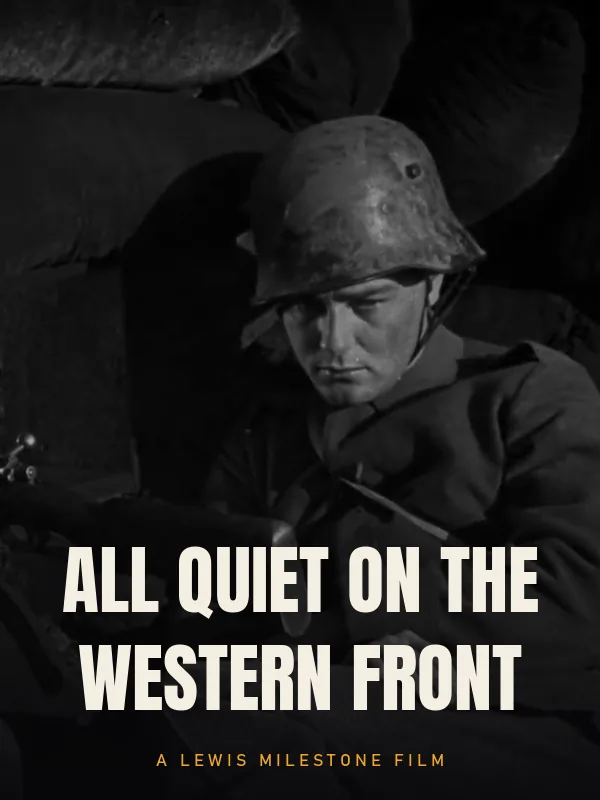
Universal adapted Erich Maria Remarque’s novel of German schoolboys who enlist in World War I and are destroyed by it. Directed by Lewis Milestone, All Quiet on the Western Front was a large and costly production, with harrowing battle scenes that still hold up. At the 3rd Academy Awards, held November 5, 1930, it won Outstanding Production (now Best Picture), and Milestone won Best Director. The Library of Congress added it to the National Film Registry in 1990.
Because it was released in 1930, the film entered the U.S. public domain on January 1, 2026, which is why IFN can stream it free. Our guide to how to tell if a movie is in the public domain explains how that works.
1931: Dracula, Frankenstein, and the Universal horror cycle
Junior Laemmle’s next bet created a genre identity that has followed Universal ever since. Dracula, directed by Tod Browning and starring Bela Lugosi, opened in February 1931. Frankenstein, directed by James Whale with Boris Karloff as the Monster, followed in November 1931, with make-up by Jack Pierce that became one of the most recognizable images in film history. Both were hits, and Universal followed them with The Mummy (1932), The Invisible Man (1933), Bride of Frankenstein (1935), and a long line of sequels into the 1940s, now known as the Universal horror or Universal Monsters films.
The cycle drew on silent-era German cinema, with its shadows and stylized sets, and on Universal’s own Lon Chaney films. Frankenstein joined the National Film Registry in 1991 and Dracula in 2000.
Coming to the public domain: U.S. films released in 1931 enter the public domain on January 1, 2027, 95 years after release. That includes Dracula and Frankenstein. Only the films themselves become free to use: later sequels, remakes, and Universal’s trademarks stay protected, so anyone planning to use the characters should read up carefully, starting with our public domain guide.
1936: losing the studio
Junior’s ambition proved costly. To finish the musical Show Boat (1936), Universal borrowed $750,000 from the Standard Capital Corporation, with the Laemmle family’s controlling interest as collateral. The production went far over budget, and when Standard called in the loan, Universal couldn’t pay. Standard foreclosed and took control on April 2, 1936. J. Cheever Cowdin became president, and the Laemmles were out of the studio they had built. Carl Laemmle died on September 24, 1939, at 72.
In his last years Laemmle used his fortune for something that outlasted any film. As the Nazis took power in Germany, he signed sponsorship affidavits, financial guarantees the U.S. required of immigrants, for hundreds of German Jews, many from his hometown of Laupheim, helping them emigrate to the United States. By 1938 the U.S. government would no longer accept more of his personal affidavits, and he urged friends to sign their own.
After the Laemmles
Universal kept going through a long series of owners. It merged with International Pictures in 1946 to become Universal-International. Decca Records took control in 1952, and the talent agency MCA took over in 1962. Japan’s Matsushita bought MCA in 1990, Seagram bought most of it in 1995, and today Universal is part of NBCUniversal, owned by Comcast. Through it all, the studio stayed on the land Laemmle bought in 1915.
Watch the studio’s early work
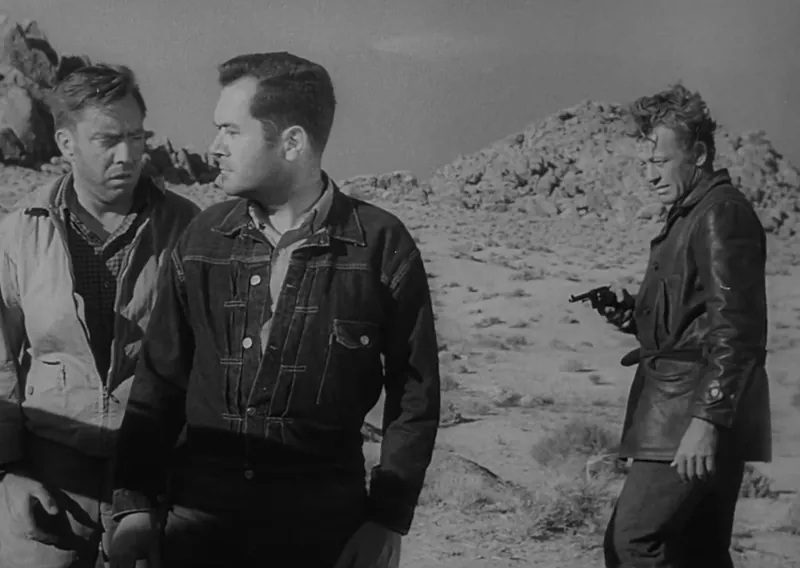
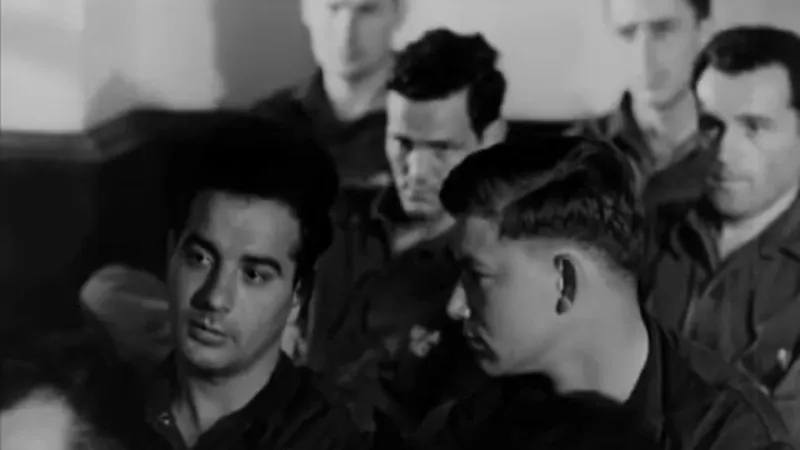
Start with All Quiet on the Western Front, still one of the most powerful films ever made about war. If you like it, IFN’s other films from the era include the U.S. Army documentaries of World War II, such as John Huston’s, which you can read about in our article on Let There Be Light.
Sources
- Wikipedia, “Universal Pictures” (founding, Universal City, the Laemmles, the 1936 foreclosure, and later owners). en.wikipedia.org/wiki/Universal_Pictures
- Wikipedia, “Carl Laemmle” (biography and refugee affidavits). en.wikipedia.org/wiki/Carl_Laemmle
- Smithsonian Magazine, “This Hollywood Titan Foresaw the Horrors of Nazi Germany.” smithsonianmag.com/arts-culture/this-hollywood-titan-foresaw-...
- The Hollywood Reporter, “Remembering the Hollywood Mogul Who Rescued Hundreds of Jews” (affidavits on record in Stuttgart). hollywoodreporter.com/race/remembering-hollywood-mogul-who-re...
- Wisconsin Jewish Chronicle, “Oshkosh clerk became movie mogul and rescuer of Jews,” 2015. jewishchronicle.org/2015/03/30/oshkosh-clerk-became-movie-mog...
- Udo Bayer, Carl Laemmle: Laemmle’s List, Affidavits Save Lives (Laupheim).
- Academy of Motion Picture Arts and Sciences, “The 3rd Academy Awards, 1931.” oscars.org/oscars/ceremonies/1931
- The Studio Tour, “Universal Studios Hollywood: History” (1915 visitor admission and the 1964 tour). thestudiotour.com/wp/studios/universal-studios-hollywood/univ...
- Library of Congress, “Complete National Film Registry Listing.” loc.gov/programs/national-film-preservation-board/film-regist...
- Cornell University Library, “Copyright Term and the Public Domain in the United States.” guides.library.cornell.edu/copyright/publicdomain
Online sources checked November 14, 2026.