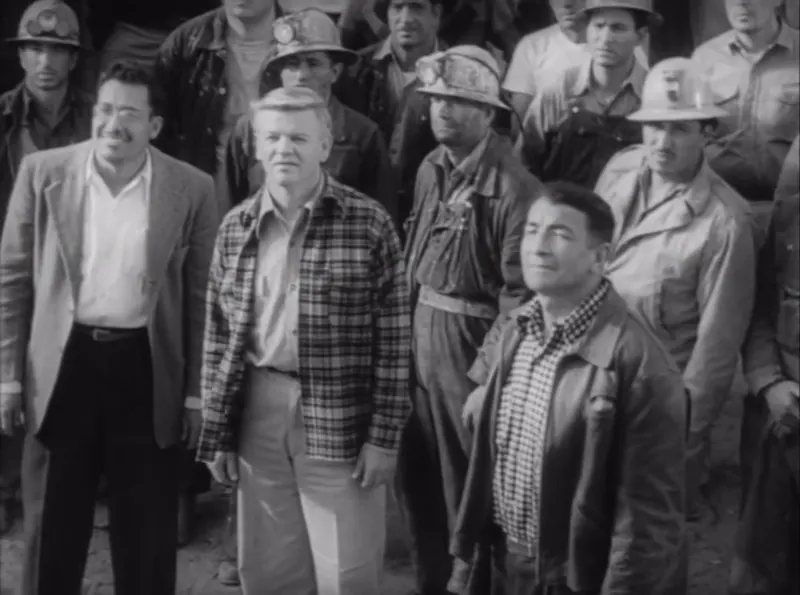
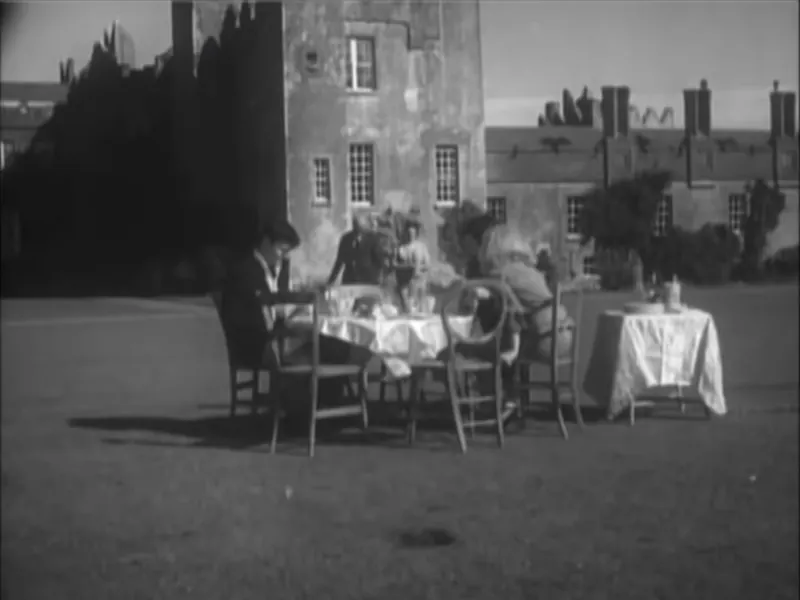
Blocking is the plan for where actors stand and how they move during a scene: who enters when, who crosses to the window, who sits, who stands over whom. It comes from theater, but on a film set it has a second partner, the camera. Good blocking makes a scene feel natural and tells the audience who has the power, without a word of dialogue. This guide explains the vocabulary, the staging patterns directors rely on, how a film set runs blocking, and how to put movement on the page.
Where the word comes from
A story often told traces the term to the Victorian theater director W. S. Gilbert, of Gilbert and Sullivan, who planned his productions by moving small blocks around a model of the stage. Whatever its exact origin, the meaning is the same today on stage and on set: working out positions and movement in advance.
Stage directions: the theater vocabulary
- Stage left and stage right: from the actor’s point of view, facing the audience. Stage left is the audience’s right.
- Upstage and downstage: upstage is away from the audience, downstage is toward it. The terms date from raked stages, which sloped up toward the back, so moving away from the audience literally meant walking uphill.
- Center stage: the middle of the playing area.
- Cross: a move from one place to another, as in “cross downstage left.”
- Upstaging: standing upstage of another actor, which forces them to turn away from the audience to talk to you. It’s where the everyday meaning of “upstaging someone” comes from.
- Cheat out: angle your body toward the audience while still seeming to face your scene partner.
Film directions: the camera’s vocabulary
- Camera left and camera right: from the camera’s point of view, the opposite of stage directions for an actor facing the lens. On set, say which one you mean.
- Marks: tape on the floor (often a T or a V) showing where an actor stops, so they land in focus and in their light. “Hitting your mark” is a core screen-acting skill.
- Cheat: on film, moving an actor or object slightly from where they “really” are so the shot works. A cup moved closer, an actor a step to the left. If the audience can’t tell, it’s a good cheat.
- Eyeline: where an actor looks. In close-ups, an actor looks just to one side of the lens, at the other character’s position, so the eyelines match when the shots are cut together.
- Background action: what extras and props do behind the main action, and it needs blocking too.
Why blocking matters
- Motivation: characters move because they want something. A move toward someone can be a threat, a plea, or affection; a move away can be fear, guilt, or dismissal. Ask “why does she cross now?” and the answer is usually in the dialogue’s turning points.
- Power and relationships: height and distance tell the audience who’s in control. A character standing over a seated one has the upper hand until the seated one stands.
- Composition and depth: placing actors at different distances from the camera (foreground, middle ground, background) makes a flat screen feel deep and gives the eye a path.
- Rhythm: movement punctuates beats. A scene where nobody moves for five pages can work, but only if stillness is the point.
Staging patterns that work
- The triangle: three characters arranged as a triangle, at varied distances from the camera, so every face can be seen. Directors use it constantly for group scenes.
- Depth staging: one actor close to the camera, another deep in the frame. Both can be seen in one shot, which saves setups and builds tension, especially if the one in front can’t see the one behind.
- Side by side: two people walking or sitting next to each other. Good for shared purpose, or for characters who can’t face each other.
- Face to face: conflict or intimacy. Usually covered with over-the-shoulder shots.
- Entrances and exits: plan where they happen. An entrance toward the camera feels like arrival; an exit away from it feels like a departure that matters.
How blocking works on a film set
Many sets follow the same order for each scene, often summed up as block, light, rehearse, shoot:
- Blocking rehearsal: the director walks the scene with the actors, with the cinematographer and key crew watching. Positions get worked out and marked on the floor.
- Marking and lighting: the camera team marks focus distances, and the actors step away while stand-ins (the “second team”) stand on the marks so the crew can light and set the camera.
- Rehearsal: the actors (“first team”) come back and run the scene with the camera moving, so everyone checks timing, focus, and the boom.
- Shoot: takes, then on to the next setup.
On a small indie shoot, the same steps apply in miniature: walk the scene, tape the marks, light it, run it once with the camera, then roll.
Plan it on paper first
Draw an overhead floor plan of the location: walls, doors, furniture. Mark each actor’s starting position (A1, B1), draw arrows for their moves to new positions (A2, B2), and add the camera setups. This plan becomes the base for your shot list, and it reveals problems before the shoot, like an actor who has to cross through the camera’s position.
Blocking and the camera line
In a conversation, the camera stays on one side of an imaginary line between the two characters: the 180-degree rule. When actors move, the line moves with them. If your blocking swaps two people’s positions, plan a shot that carries the audience across, such as a camera move during the cross, or a shot down the line itself, so viewers aren’t confused about who is where.
Continuity matters too: if an actor picks up a glass with the right hand on line three, it should be in the right hand in every take. On larger sets, the script supervisor tracks this; on small ones, someone needs to.
Writing movement in your script
In a screenplay, movement goes in the action lines. Write only the moves that matter to the story, in plain, present-tense description, and leave the detailed blocking to the director and actors. Stage terms like “stage left” don’t belong in a screenplay.
Too much:

Mara takes three steps to the left, turns
45 degrees, sits in the chair, crosses her
legs, picks up the cup with her right hand.

Better:

Mara sits across from him, as far away as
the table allows. She doesn't touch the
coffee he poured.
The second version gives the director and actor what they need, the distance and the refusal, and leaves room for them to find the moves. Our guide to writing a screenplay covers format and action lines in full.
Directing movement, especially with non-actors
- Give actions, not emotions. “Fold the laundry while you tell him” gets a more natural performance than “be upset.”
- Tie moves to lines. “On ‘I’m leaving,’ stand up” is easier to repeat take after take than “stand up at some point.”
- Keep marks simple. Fewer, clearer marks; let actors find their own way between them.
- Watch the monitor. A move that feels right in the room can block a face in the frame.
Try it: take a one-page, two-person argument and stage it in your kitchen three ways: (1) both seated the whole time, (2) one person standing and moving, the other seated, (3) both moving, with one leaving at the end. Shoot each in a single wide take on a phone. Watch which version makes the power shift clearest, then draw that one as a floor plan with the camera setups you’d need.
Watch for it on IFN
A two-person scene at a kitchen table, like the one in House Call, still needs staging decisions: who sits, who stands, and when. The classic thrillers on IFN, many shot fast and cheap, rely on staging in depth to build suspense in a single frame. Watch with the floor plan in mind:



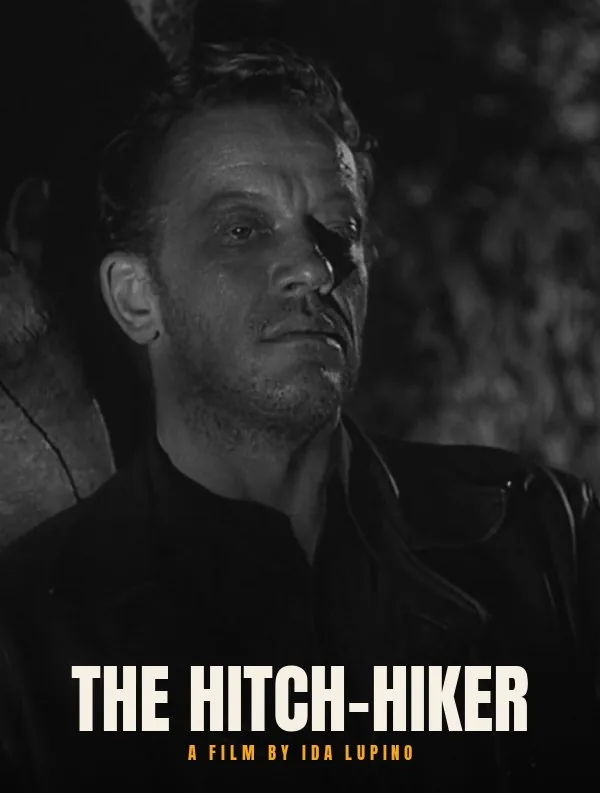
Browse every film on IFN, and when you’ve made your own, submit it, free.
Sources: Steven D. Katz, Film Directing Shot by Shot (Michael Wiese Productions), on staging for the camera and depth staging; David Bordwell and Kristin Thompson, Film Art: An Introduction (McGraw-Hill), on staging and mise-en-scène. The origin of “blocking” is traditional and not firmly documented.